
Education
The Math of Compounding Monthly Returns — Why 6% Per Month Is a Big Deal
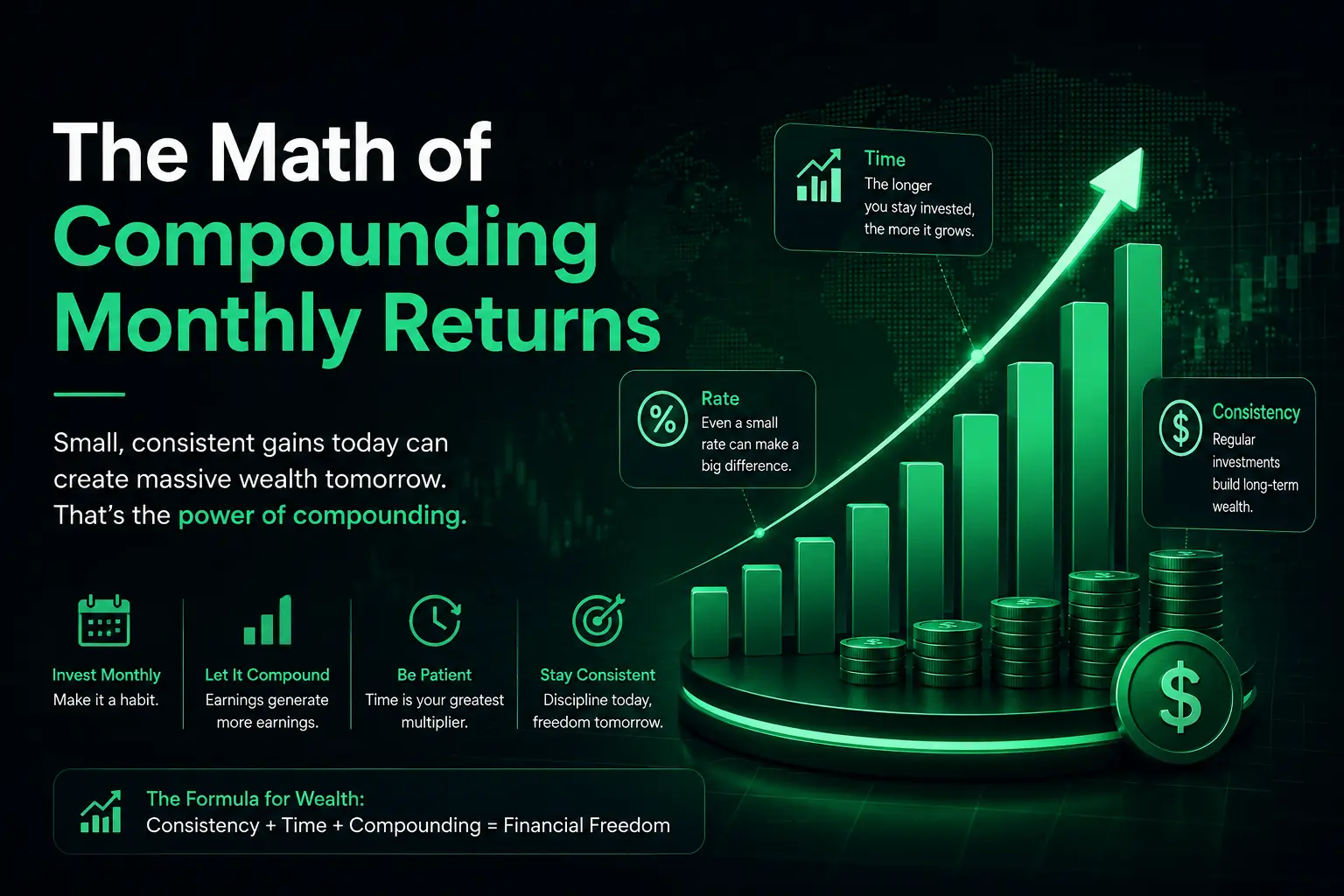
Albert Einstein reportedly called compound interest the eighth wonder of the world. Whether or not he actually said it, the math is undeniable — and it is the single most underrated concept in personal finance. Understanding compounding is the difference between making money for one year and building wealth across decades.
This guide does not bury the formulas. It just shows you the numbers, walks you through why they look the way they do, and points out the silent killers most investors do not notice until it is too late.
The 60-second mental model
Compounding is when your gains start producing their own gains. You earn $6 in month one on $100. In month two you are not earning on $100, you are earning on $106. By month twelve you are earning on a meaningfully bigger base. The growth curve looks like a straight line at first and then bends upward — that bend is where the magic lives.
$1,000 at 6% per month, reinvested
- After 6 months: $1,419
- After 12 months: $2,012
- After 24 months: $4,049
- After 36 months: $8,147
- After 48 months: $16,394
- After 60 months: $32,987
Notice the curve. The first year roughly doubles the money, but the fifth year alone more than doubles it again. This is why time in the market beats timing the market — compounding accelerates the longer you let it run.
Side-by-side at 4%, 6%, and 8% per month
- $1,000 at 4%/month for 36 months — $4,104
- $1,000 at 6%/month for 36 months — $8,147
- $1,000 at 8%/month for 36 months — $15,968
The Aggressive tier roughly doubles the Conservative outcome over three years. The Balanced tier sits roughly in the middle. None of these are guarantees — they are the result of multiplying the long-run target rate compounded across the period — but they show why the choice of tier matters more than most beginners assume.
Why monthly compounding wins over annual compounding
Each month's profit becomes next month's capital. The same long-run rate compounded monthly produces a noticeably bigger end balance than the equivalent rate paid out annually, because the interest starts earning interest twelve times a year instead of once. With Qorix Auto-Compound enabled, this happens automatically without you needing to do anything.
The silent killers of compounding
1. Withdrawing profits early
Every dollar you pull out of the system never compounds again. There are perfectly good reasons to withdraw — covering an expense, taking profits at a milestone — but every withdrawal is a permanent reduction in the compounding base. Most investors do not feel this cost until five years in, when they realise the 'small' withdrawal in year two would have been a much larger amount today.
2. Pausing during drawdowns
It is psychologically tempting to pull out during a bad month and 'wait for it to settle down'. Historically, the market does not telegraph the bottom — by the time conditions feel safe again, the recovery is usually well underway. Discipline matters.
3. Fees that eat the curve
A 1% management fee per year sounds tiny. Over 10 years it compounds to roughly 10% of your gains. Over 20 years it can be 18%+. This is one reason Qorix uses a performance-only fee model — see our zero-fee guide for the breakdown.
The real-world ceiling on monthly returns
The reason 6% per month is not casually advertised across all of finance is that sustaining it requires real infrastructure — institutional execution, disciplined risk, multi-asset diversification, and 24/7 monitoring. A retail trader with a charting app cannot replicate this. The reason it works on Qorix is that you are renting the infrastructure, not building it.
Discipline plus time is the formula. Most people have one and want the other. Compounding rewards the people who have both.
How Auto-Compound works on Qorix
When Auto-Compound is on, a configured portion of realised profits is automatically rolled into your trading balance at the end of each cycle. You do not need to log in, transfer balances, or remember to top up. Set it once and the compounding curve runs itself.
What to do this month
- Pick a risk tier and write down its target return
- Turn on Auto-Compound from your wallet settings
- Calendar a quarterly review (every 90 days, not weekly)
- Avoid the temptation to withdraw small amounts in year one
Continue reading